
Description
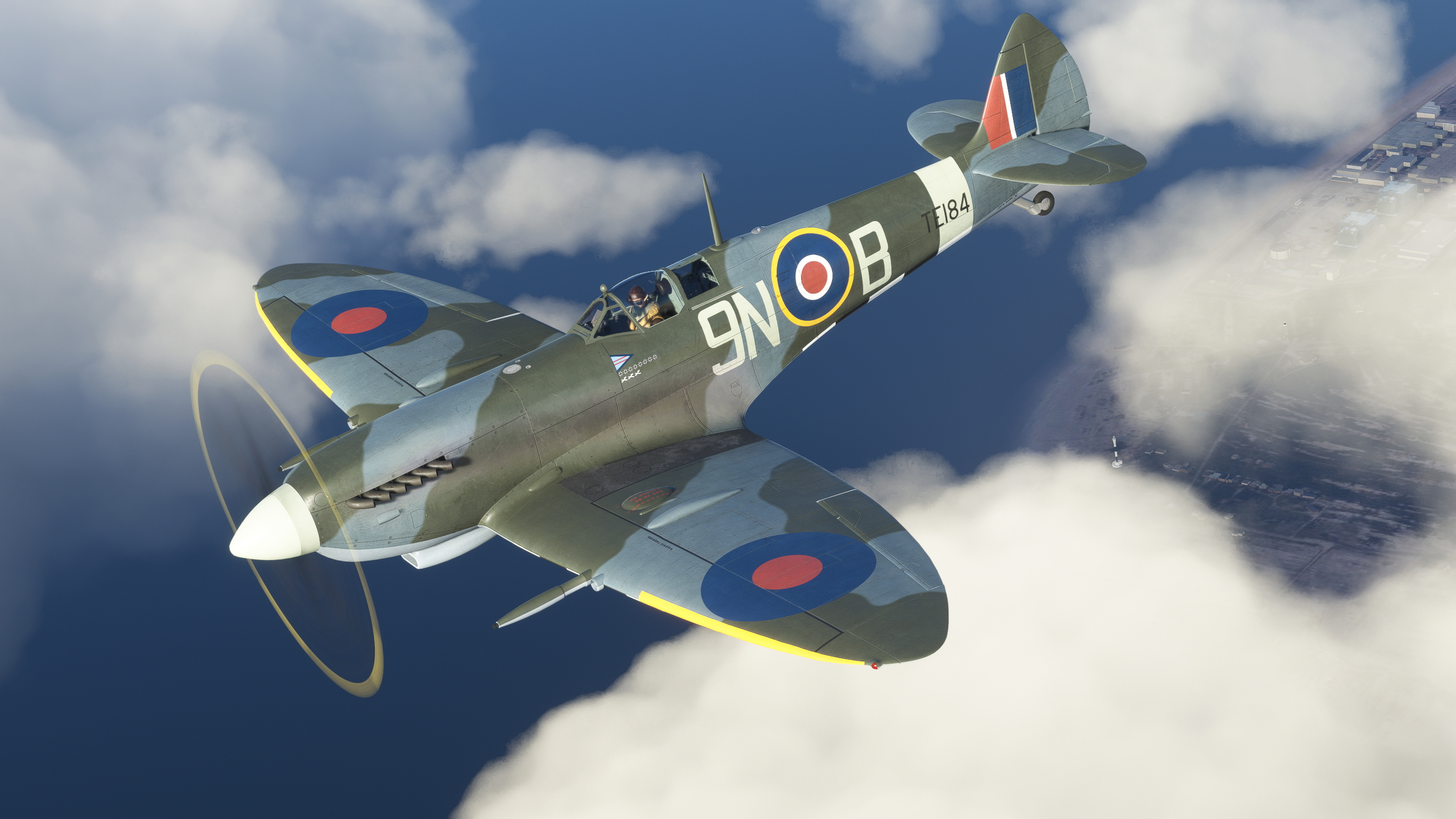
This repaint, made for the FlyingIron Simulations Spitfire Mk.IXc, depicts the restored Spitfire Mk.XVIe TE184, registered in the UK as G-MXVI, as it looked from 2017 through 2019 when owned by Stephen Stead. At the time, it was finished in the color scheme of a RAF No 127 Squadron Spitfire flown by Czechoslovakian-born Squadron Leader Otto Smik, with fuselage code 9N-B. The repaint can be flown with or without clipped wings, just as the wingtips have been changed frequently on the real world aircraft as well.
The Spitfire Mk.XVI is essentially identical to that of the Spitfire Mk.IX, with the only real difference being the engine. Where as the Mk.IX was powered by a Rolls-Royce manufactured Merlin 66, the Mk.XVI was powered by the equivalent Packard-built Merlin 266. Both the Mk.XI and Mk.XVI were produced with "high back" and "low back" versions as well.
Spitfire TE184 was manufactured in May 1945 as a "low back" Mk.XVIe by the Castle Bromwich Aeroplane Factory, located near Birmingham, UK. After being delivered to No 9 Maintenance Unit (MU) at RAF Cosford, it was put into a lengthy period of storage, which included moves to No 20 MU and No 6 MU at Brize Norton. In September 1948, it was finally put into action when it was assigned to RAF No 203 Advanced Flying School at Stradishall, in Suffolk. This was then followed by a stint with No 607 Squadron of the Royal Auxiliary Air Force at Ouston, in Northumberland, before it was placed back into storage with No 33 MU at Lyneham in June 1950. Pulled out of storage again, TE184 was issued to the Central Gunnery School at Leconfield in November 1950, but then sustained serious damage as a result of a landing gear collapse, on landing, in January 1951. This incident brought its flying career to an end.
Following the accident, TE184 was transferred to No 64 Reserve Centre at Long Benton, in Newcastle-Upon-Tyne, for use as a ground instructional airframe. Then in 1952, it was moved to No 1855 Squadron Air Training Corps. at Royto, in Lancashire, and placed on static display until February 1967, when it was brought to RAF Bicester to be used as a static airframe in the film "The Battle of Britain". Following completion of film work in 1968, TE184 moved to RAF Cranwell as a gate guard before moving to RAF Finningley to join the museum collection there. In August 1970, it was on the move again and transferred to No 5 MU at Kemble, and then to No 23 MU at Aldergrove in 1971, for storage before going on display at the Ulster Folk and Transport Museum, Cultra, Holywood, in March 1977.
In 1986, TE184 was sold to Spitfire restorer Nick Grace. Following his death in a car accident in October 1988, TE184 was acquired by Myrick Aviation Services and placed on the UK civil register as G-MXVI in February 1989. The aircraft was sent to Trent Aero Service, at Castle Donington, for complete restoration to airworthy as a "high back" Mk.XVI. Its first post-restoration test flight was carried out on November 23, 1990. The aircraft was completed in the unique high altitude color scheme of Medium Sea Gray over PRU Blue as worn by Mk.VII Spitfires.
In 1995, TE184 was sold to Alain de Cadenet and it was brought to Hawker Restorations. It was displayed at the Duxford Spitfire Air Shows of May 1998 and May 1999, repainted in the desert camouflage markings of the USAAF 308th Fighter Squadron, representing "Fargo Express", as flown by Capt. Leland P. Holland. Then in September 2000, at the Duxford 60th Anniversary Battle of Britain Air Show, it displayed another change of markings, having been refinished in a color scheme of the Free French Air Force.
After having been placed into storage at RAF Halton in 2001, TE184 was flown to Duxford in March 2004 for maintenance at the Old Flying Machine Company. In October 2006, it was sold to Paul Andrews/"G2 Trust", and the Spitfire underwent a full refurbishment with Personal Plane Services at Booker. With the work completed, it was test flown in February 2009 and was soon repainted in the personal markings of a Spitfire Mk.IX flown by RAF Tangmere Wing Comander Jack Charles, with the fuselage code letters EJC.
In April 2011, Spitfire TE184 was sold to Stephen Stead who, while displaying the aircraft all over Europe, based the aircraft at Biggin Hill in the UK. Under Stephen Stead's ownership, TE184 has worn several different paint schemes over the past decade, paying tribute to Polish and Czechoslovakian pilots that flew for the RAF. In 2021, TE184 was sold to Peter Freedman of Australia, though the aircraft is likely to remain based in the UK. It currently resides with the Biggin Hill Heritage Hangar at the Biggin Hill Airport.
(Repaint Note: The civil registration, "G-MXVI", can really only be seen under the starboard tail and not on the port side, and this was true of the real aircraft at the time that this repaint reflects. The registration had been applied, using vinyl stickers, on both sides of the tail, but the stickers on the port-side came off not long after, where as the stickers on the starboard side remained. You can however still see a ghosted image on the port side tail where the stickers had been.)
Spitfire Mk.XVI TE184 (2019)
Repaint of the iconic Spitfire Mk.XVI TE184, depicting its various paint schemes and history from 1945 to present day, including its ownership by Stephen Stead and Peter Freedman. Can be flown with or without clipped wings, for an authentic experience based on the real-world aircrafts changes over time. Created for the FlyingIron Simulations Spitfire Mk.IXc, this update version 2.1 ensures a seamless display of the historical repaint.

Avis des utilisateurs
2 avis
Historique des versions
Added compatibility for MSFS 2024 by regenerating new Layout.JSON file. Update not required for MSFS 2020. Changed version number to 3.0 for consistency across all of my FI Spitfire repaints.
Similaires
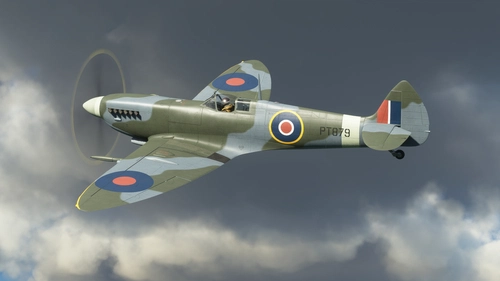
Spitfire Mk.IX PT879 Factory-Delivered (Restored)
Experience the meticulously restored Spitfire Mk.IX PT879 in its original factory-delivery paint scheme with this detailed FlyingIron Simulations repaint. This iconic aircraft served with Russia during World War Two before being recovered and painstakingly rebuilt, now flying again in all its historic glory. Enjoy enhanced PBR materials, accurate colors, and intricate details reflecting the authentic appearance of this legendary Spitfire. Created by John Terrell, this repaint captures the essence of PT879s remarkable journey and restoration process, making it a must-have for aviation enthusiasts in Microsoft Flight Simulator.
par Bomber12th
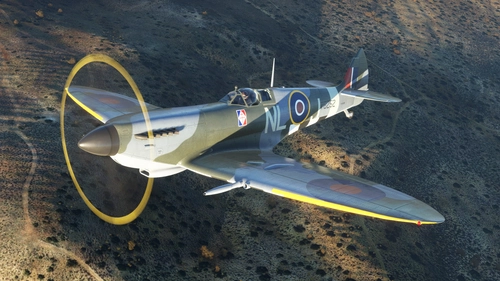
Spitfire Mk.XVI TB252 (N752TB)
Experience the iconic Spitfire Mk.XVI TB252 (N752TB) with this realistic repaint for the FlyingIron Simulations Spitfire Mk.IXc. Choose to fly with either full-length or clipped wings, and enjoy the detailed history behind this restored beauty based in California. Explore the intricate repaint details and fly this legendary aircraft with authenticity and precision.
par Bomber12th
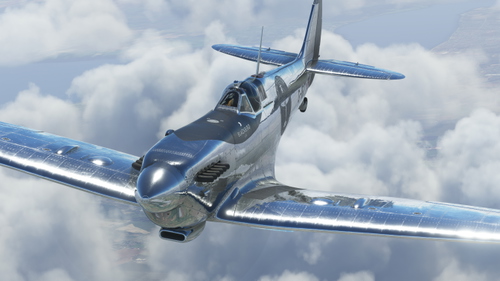
Spitfire Mk.IX MJ271 "The Silver Spitfire" G-IRTY
Experience the iconic restored Spitfire Mk.IX MJ271 - "The Silver Spitfire" in Microsoft Flight Simulator with this detailed repaint, featuring two versions of the aircraft as it appeared during its record-setting global flight in 2019. This add-on includes meticulous recreations of the real aircrafts markings, logos, and polished bare-metal finish, providing an authentic representation for aviation enthusiasts. Enhance your simulation with accurate details such as the rudder, landing gear, PBR maps, and various access panels, making it a must-have for history buffs and Spitfire fans alike.
par Bomber12th
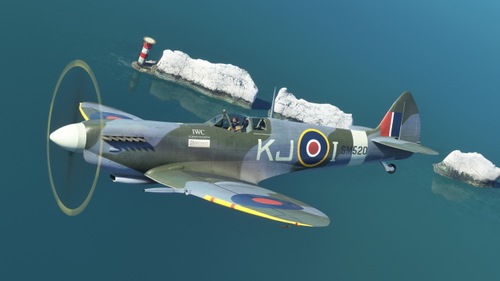
Spitfire Mk.IX SM520 (2021)
Repaint of the iconic Spitfire Mk.IX SM520, showcasing enhanced PBR materials and updated color values for better realism in Microsoft Flight Simulator. This two-seat trainer Spitfire, registered as G-ILDA, has a rich history from its manufacturing in 1944 to its restoration process, making it a unique and historically significant aircraft to fly in-game. Operating under Spitfires.com, experience the legacy of this Spitfire as you take to the skies in its meticulously recreated paint scheme from its SAAF service days during World War Two. Welcome aboard this piece of aviation history.
par Bomber12th
Connectez-vous pour participer à la discussion
Se connecterCommentaires(4)
over 4 years ago
great livery! also wondered how do you have modelled needles on your scenery? my base msfs hasnt got them moddled,
over 4 years ago
Thank you! The Needles scenery is available here: https://flightsim.to/file/18331/needles-lighthouse-helipad
over 4 years ago
Indeed great repaint (and research) Top notch repaint!
over 4 years ago
Wonderful as always... Many thanks John!!!