Flightsim.to
    Release Radar

    Prochains add-ons, devlogs et suivi des sorties.

    Suivez les projets de créateurs indépendants et de studios professionnels dans la communauté de la simulation de vol. Soyez notifié dès leur sortie et suivez leur progression.

    Showing 1 - 16 of 49 results
    Nouveau

    Ne manque aucune sortie

    Recevez des notifications push instantanées pour les nouvelles sorties, les mises à jour de devlog et plus encore — directement sur votre smartphone, tablette ou ordinateur.

    Configurer les notifications push
    Derniers devlogs

    Directement des créateurs

    Mises à jour, captures d’écran et jalons de tous les projets suivis.

    View All
    Devlog from
    iniBuilds A350 Airliner v2
    iniBuilds
    iniBuildsUpdate
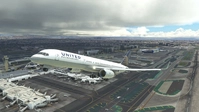
    A350 Airliner: What’s Next?

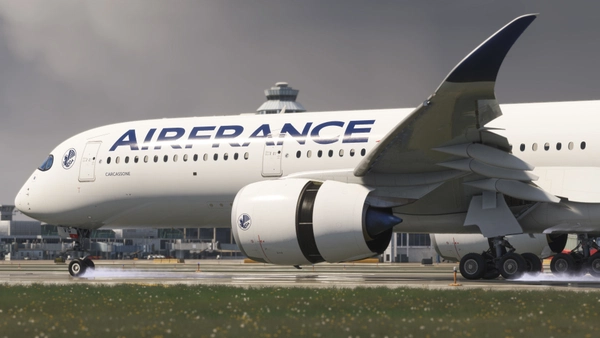
    Development of A350 Airliner V2 is now underway, representing a much broader core upgrade rather than simply a collection of fixes or a visual refresh.

    V2 includes major work across the cockpit geometry, interior and exterior artwork, aircraft variants, Head-Up Display, EFB, OIS, systems, failures and ECAM functionality. The update is being developed specifically for Microsoft Flight Simulator 2024 and will be available as a free update for all existing A350 Airliner customers.

    The cockpit itself is receiving a substantial geometry overhaul based on newly collected data, giving our art team stronger reference material for revisiting the proportions, positioning and shapes of key flight-deck elements. The wider interior artwork is also being revisited to create a more cohesive and accurate cockpit environment.

    Work is taking place on the exterior as well, with particular attention being given to the differences between the A350-900 and A350-1000. The wing geometry of both variants is being revisited so that each aircraft more accurately represents its individual proportions and characteristics, moving away from the more general representation currently shared between them.

    The Head-Up Display is receiving a major update to its logic, symbology and behaviour throughout the different phases of flight. Our goal is to improve the accuracy of the guidance shown to the crew and ensure HUD indications respond correctly as flight modes, aircraft configuration and operating conditions change.

    Both the EFB and Onboard Information System are also being revisited, with improvements planned to their functionality and integration with the wider aircraft systems. More details on the individual EFB and OIS improvements will be shared as V2 development progresses.

    Another major area is the introduction of a new failure system, alongside significant updates to the underlying systems logic. This will allow failures and abnormal situations to be represented in a more detailed and structured way. The ECAM displays and associated logic are being revisited at the same time, creating a closer relationship between simulated system states, failures, alerts and the information presented to the crew.

    With V2, Microsoft Flight Simulator 2024 will become the sole development platform for the A350 Airliner. Active development and updates for the MSFS 2020 version will conclude once V2 releases, although the existing 2020 version will remain available to customers in its current form. Focusing entirely on MSFS 2024 allows us to make greater use of the newer platform technology without being constrained by the previous simulator generation.

    Devlog from
    iniBuilds Airbus A380
    iniBuilds
    iniBuildsUpdate
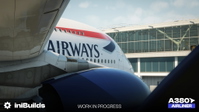
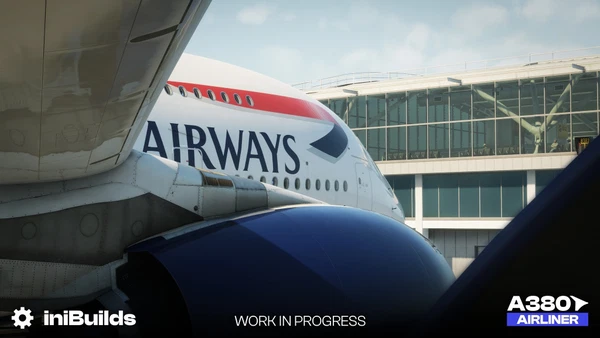
    iniBuilds A380 Airliner Development Update - August 2026

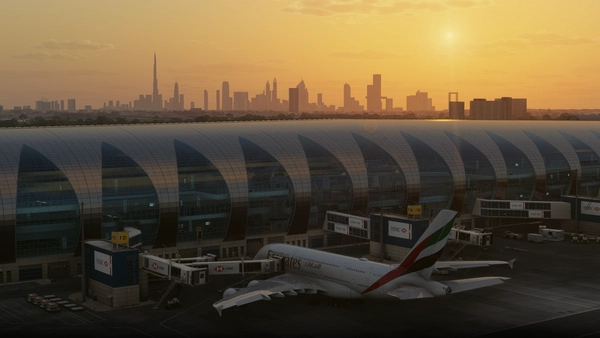
    We’ve shared a new development update covering the latest progress on our upcoming A380 Airliner, with work continuing across systems, flight dynamics, ground operations, visuals and more.

    A major focus has been on increasing the depth of the simulation. The A380 now features aircraft-state persistence, retaining elements such as fuel quantities, switch positions and system conditions between simulator sessions. Potable water and waste are also fully simulated and persistent, including consumption, accumulation and ground servicing. Turnarounds are further supported by our Multi-Jetway Technology, allowing multiple passenger boarding bridges to connect simultaneously at compatible airports.

    The EFB and OIS have received significant development as well. Take-off performance calculations include V-speeds, FLEX temperature and stop margins, with support for intersection departures. We’ve introduced the initial NSS Avionics domain, improved chart handling, added an EFB Notification Centre and upgraded our GSX integration to V2, including dedicated notifications and a panel for monitoring ground-service operations.

    Inside the flight deck, the A380 includes independent Display Unit management, a fully integrated Runway Awareness and Advisory System (RAAS) and Brake to Vacate (BTV) functionality. We’ve continued refining the fly-by-wire system and Vertical Situation Display, while the weather radar now makes use of simulator API improvements to provide adjustable tilt and azimuth. Fuel temperature is also dynamically simulated across the aircraft’s tanks and can trigger the appropriate ECAM indications when operating limits are exceeded.

    The flight model has also received considerable attention. The complete landing-gear configuration is represented, including functional body-gear steering, individual gear response using MSFS 2024’s suspension modelling and additional contact points, and dedicated A380-specific fly-by-wire rotation laws. The wings use a custom dynamic wing-flex system, responding continuously to aerodynamic forces, aircraft weight, turbulence and manoeuvring loads rather than relying on a predefined animation.

    Failures are being expanded through a comprehensive ATA-based failure-management system, including scenarios such as engine fuel leaks, gradual cabin pressurisation leaks and individual Display Unit failures. Events can be configured to occur immediately or randomly during a flight.

    We’ve also revealed that pilots will be able to select between Early-MSN and Modern-MSN configurations, based on Batch 2 and Batch 7 standards respectively. These affect FMS capabilities, flight-guidance logic, displays, protections, procedures and checklist philosophy. Both Rolls-Royce Trent 900 and Engine Alliance GP7200 options are represented as distinct variants, with individual geometry, sounds, start and shutdown behaviour, spool dynamics, thrust response and relevant system behaviour.

    Finally, exterior work continues with refined wings, engines and fuselage details, interactive Walkaround Mode elements and a range of custom Immersion FX, including water spray, engine vortices, heat blur, contrails, fuel jettison, engine fire and smoke effects, and visual effects for tail strikes.

    Read the full development update here.

    Devlog from
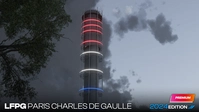
    iniBuilds Paris Charles de Gaulle Airport (LFPG)
    iniBuilds
    iniBuildsAnnouncement
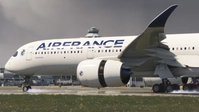
    Our Next Destination: Paris

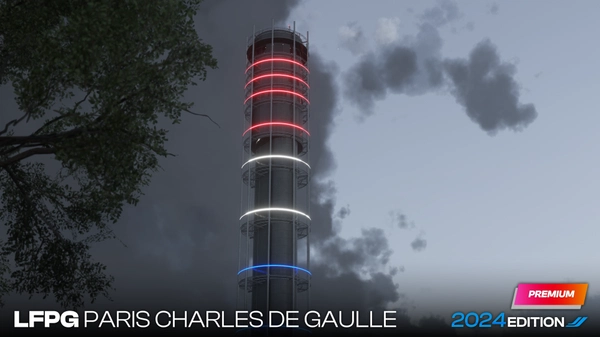
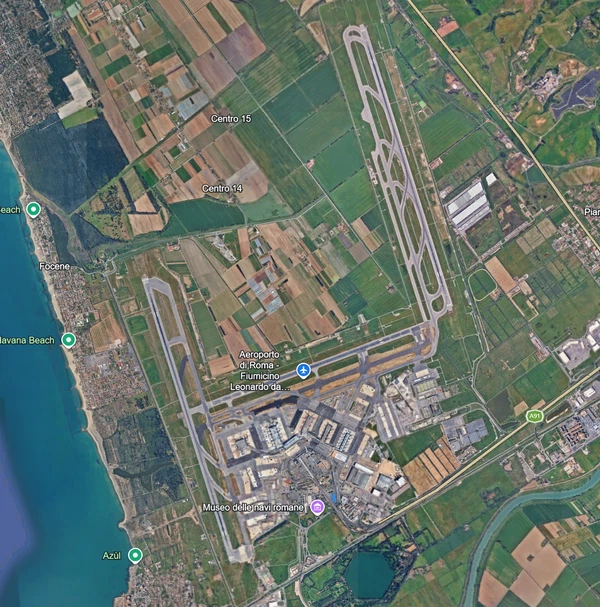
    Introducing our next destination: iniBuilds Paris Charles de Gaulle! We're pleased to announce one of Europe's largest and most important international airports, Paris Charles de Gaulle will be coming to Microsoft Flight Simulator 2024!

    If you currently work at CDG, have worked there previously or regularly operate through it and want to contribute to the project. Please contact the team directly by email
    Devlog from
    Project MAX C212-200
    Project MAX
    Project MAXAnnouncement
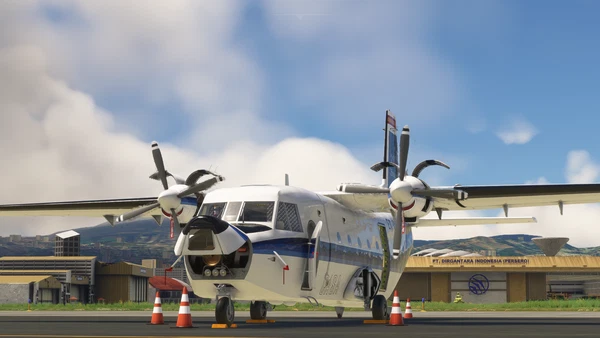
    Introducing Project MAX C212-200

    The CASA C-212 Aviocar is a pretty unusual aircraft. Originally designed as a rugged utility aircraft, the C-212 was built around a simple idea: it needed to be able to operate where larger aircraft couldn't. With its high-wing configuration, fixed landing gear, low-pressure tires, and rear cargo ramp, the Aviocar was designed for everything from short and unprepared runways to military transport and general utility operations.

    We wanted to bring that character into Microsoft Flight Simulator. The result is our C212-200, developed for both Microsoft Flight Simulator 2020 and Microsoft Flight Simulator 2024. Rather than treating the aircraft as simply another turboprop to fly around in, we've approached it as a complete simulation of the aircraft and its systems.

    From the beginning, one of our priorities was making the C212 feel like an actual aircraft rather than a collection of visual models and simulated switches.

    The cockpit has been modeled down to the individual switch level, with the various panels, instruments, and controls recreated around the real aircraft. Engine instrumentation covers torque, RPM, EGT, oil and hydraulic parameters for both engines, while the overhead panel provides access to the aircraft's electrical, hydraulic and fuel systems.

    And importantly, these aren't simply switches that move because they look good. The systems behind them are designed to actually function and interact with one another.

    The avionics can also be configured to represent different real-world C212 installations. Depending on the selected configuration, the aircraft can feature the classic HZ444 or EFD84 ADI/HSI, alongside different navigation equipment including GTN, GNS and KLN 90B units. A functional Bendix weather radar is also included.

    One of the biggest areas of focus for the C212 has been its systems.

    The electrical, hydraulic, fuel, avionics, and flight-control systems have all been developed around the real aircraft's operating logic.

    The C212-200 is powered by the Garrett/AlliedSignal TPE331-10R, and the engine has received its own dedicated simulation.

    The TPE331 is quite different from many of the turboprops commonly found in flight simulators. Its fixed-shaft architecture, direct Beta operation, and constant-speed propeller give it a distinct operating philosophy, and we've built the simulation around those characteristics. Starting procedures, engine response, propeller control, feathering, and power management are all modeled accordingly.

    For users who want to take the simulation even further, the C212 also features an optional extended engine simulation. Engines can develop their own history over time, including wear, oil consumption, contamination, individual engine variations, and maintenance effects.

    The C212-200 is also only the beginning of the C212 family within Project MAX, with the -100 already entering the development phase.

    5
    Devlog from
    EGKK - London Gatwick
    iniBuilds
    iniBuildsUpdate
    Premium for MSFS 2024 v1.1.0 Released

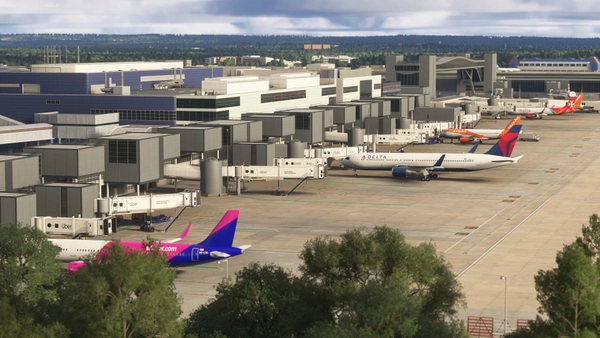
    v1.1.0 of iniBuilds London Gatwick (EGKK) for MSFS 2024 has been released. This update introduces the new Multi-Jetway System at Gates 558/559, adds Taxiway Link E and updated IHPs with accompanying signage, and improves taxiway pathing and offset-threshold behaviour for ATC and AI traffic.

    This update can be downloaded via the iniManager.

    v1.1.0

    • Added multi jetway system [Gate 558/9]
    • Added taxiway LINK E and signage
    • Added new/changed IHPs (MARLO, JACKA, N2, P2, Q2, R2) and signage
    • Taxiway paths have been decluttered to help with ATC/AI pathing
    • Taxiway/runway entries on offset thresholds should now show correct behaviour
    Showing 1 - 6 of 58 results
    En savoir plus

    Qu'est-ce que le Release Radar ?

    Le Release Radar est ton hub central pour les add-ons MSFS à venir et déjà publiés — en un clin d'œil.

    Pour les studios & développeurs

    Revendique ton profil studio, fais-le vérifier et profite de la portée complète de Flightsim.to pour présenter tes projets directement à la communauté. Que tu sois un studio professionnel ou indépendant — ton public est ici.

    Pour les simmer

    Suis tous les sorties MSFS 2020 & 2024 en un coup d'œil. Suis des projets, ajoute-les à ta liste de souhaits et sois notifié dès que ton prochain add-on préféré est disponible.

    Commencer à explorer