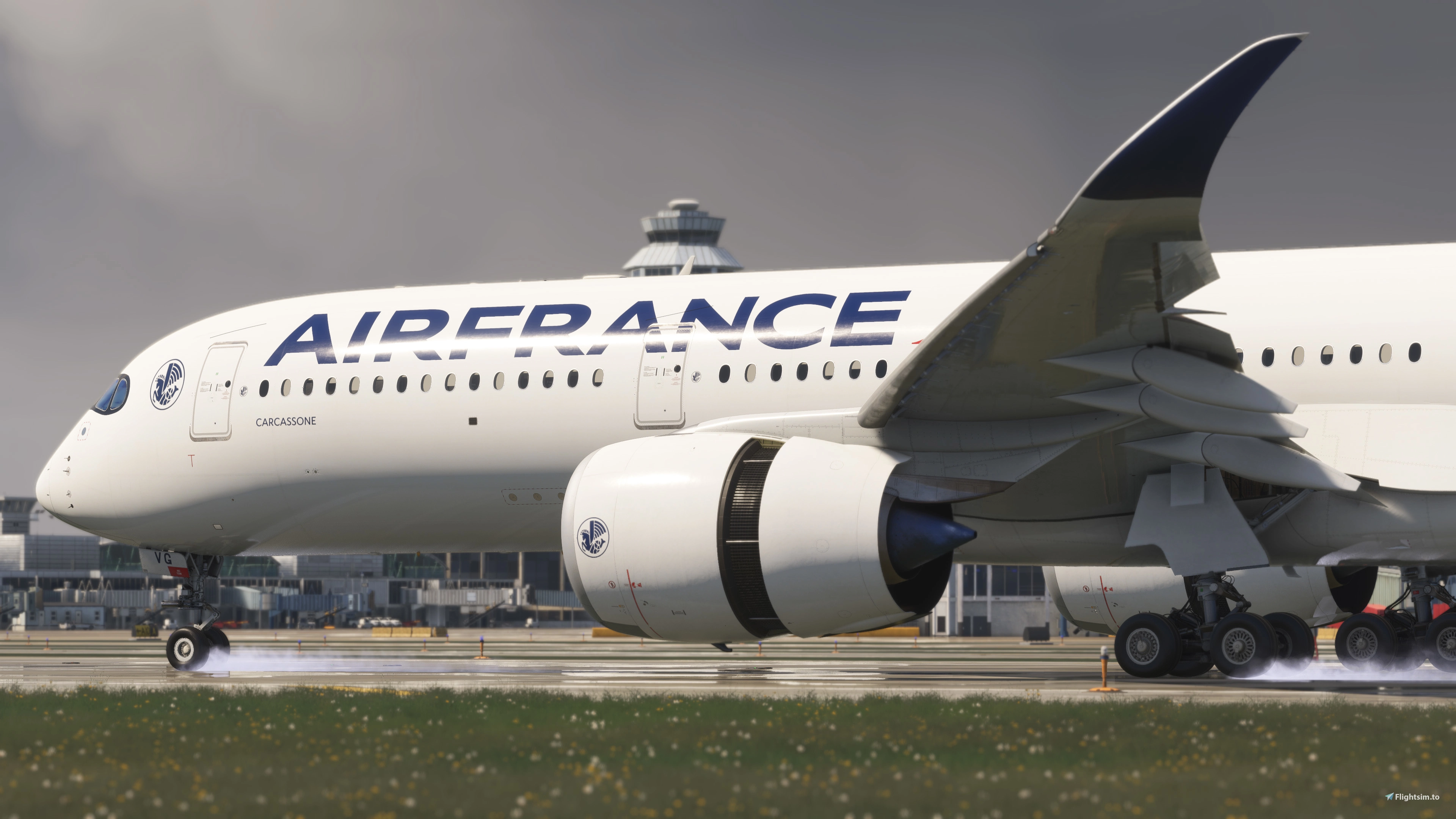
Development of A350 Airliner V2 is now underway, representing a much broader core upgrade rather than simply a collection of fixes or a visual refresh.
V2 includes major work across the cockpit geometry, interior and exterior artwork, aircraft variants, Head-Up Display, EFB, OIS, systems, failures and ECAM functionality. The update is being developed specifically for Microsoft Flight Simulator 2024 and will be available as a free update for all existing A350 Airliner customers.
The cockpit itself is receiving a substantial geometry overhaul based on newly collected data, giving our art team stronger reference material for revisiting the proportions, positioning and shapes of key flight-deck elements. The wider interior artwork is also being revisited to create a more cohesive and accurate cockpit environment.
Work is taking place on the exterior as well, with particular attention being given to the differences between the A350-900 and A350-1000. The wing geometry of both variants is being revisited so that each aircraft more accurately represents its individual proportions and characteristics, moving away from the more general representation currently shared between them.
The Head-Up Display is receiving a major update to its logic, symbology and behaviour throughout the different phases of flight. Our goal is to improve the accuracy of the guidance shown to the crew and ensure HUD indications respond correctly as flight modes, aircraft configuration and operating conditions change.
Both the EFB and Onboard Information System are also being revisited, with improvements planned to their functionality and integration with the wider aircraft systems. More details on the individual EFB and OIS improvements will be shared as V2 development progresses.
Another major area is the introduction of a new failure system, alongside significant updates to the underlying systems logic. This will allow failures and abnormal situations to be represented in a more detailed and structured way. The ECAM displays and associated logic are being revisited at the same time, creating a closer relationship between simulated system states, failures, alerts and the information presented to the crew.
With V2, Microsoft Flight Simulator 2024 will become the sole development platform for the A350 Airliner. Active development and updates for the MSFS 2020 version will conclude once V2 releases, although the existing 2020 version will remain available to customers in its current form. Focusing entirely on MSFS 2024 allows us to make greater use of the newer platform technology without being constrained by the previous simulator generation.